A Military Safe Haven is a modular, transportable, or fixed hardened space specifically designed and constructed to provide the highest level of protection in extreme threat environments. It serves as an essential "safety refuge" on the battlefield or in high-risk areas, aiming to protect personnel, critical equipment, command and control systems, or sensitive materials inside from various lethal threats.
Core Objectives & Value
-
Survivability Assurance: The primary mission is to ensure internal personnel are shielded from major battlefield threats including direct fire, blast overpressure, fragmentation, Nuclear, Biological, and Chemical (NBC) contamination, and electromagnetic pulse (EMP) interference.
-
Mission Continuity: Provides a protected operating environment for critical command and control nodes, communication centers, field hospitals, data centers, etc., ensuring core military functions remain uninterrupted during attacks.
-
Information Security & Confidentiality: Offers an electromagnetically shielded environment to prevent sensitive information from being intercepted, jammed, or leaked (protecting against EMP/information leakage).
-
Rapid Deployment & Mobility: Many are designed with modularity, containerization, or air/vehicle transportability for swift response to frontline needs or emergencies.
-
Environmental Adaptability: Features integrated life support systems (e.g., air filtration, temperature/humidity control) to maintain a safe and comfortable internal environment in NBC-contaminated, extreme temperature, or high-altitude conditions.
Primary Protective Capabilities
-
Ballistic Protection: Utilizes high-strength composite armor (e.g., steel plate, ceramics, Kevlar, ballistic glass) to resist bullets of various calibers, artillery fragments, and even rocket attacks (protection levels typically classified per standards like STANAG 4569).
-
Blast Protection: Special structural designs (e.g., sloped surfaces, energy-absorbing layers) and materials effectively absorb and dissipate blast shockwaves and high-velocity fragments, preventing structural breach and mitigating internal personnel injuries from blast effects.
-
NBC Protection: Features complete airtight sealing, equipped with high-efficiency air filtration systems (against nuclear particulates, biological agents, chemical toxins), and maintains internal overpressure to prevent ingress of contaminated external air.
-
Electromagnetic Protection: Incorporates comprehensive electromagnetic shielding design to effectively defend against Electromagnetic Pulse (EMP) weapon attacks, preventing damage to internal electronics or external interception of sensitive information (complies with TEMPEST standards).
-
Fire & High-Temperature Resistance: Employs fire-retardant materials and thermal insulation layers to withstand external fires or extreme heat for a defined period.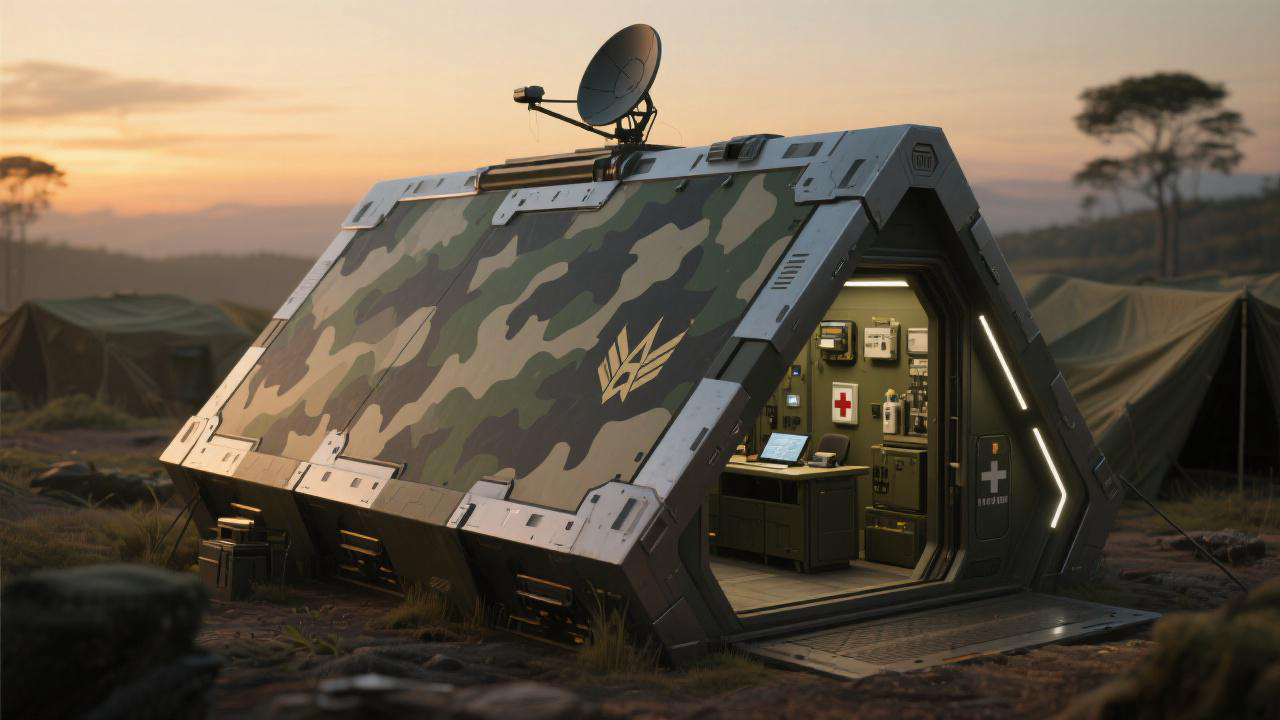
Typical Application Scenarios
-
Forward Command Posts: Provide commanders and staff officers with a secure, confidential, and stable command environment.
-
Tactical Operations Centers (TOCs): Serve as protected hubs integrating communications, intelligence, surveillance, and reconnaissance (C4ISR) equipment.
-
Field Hospitals/Medical Stations: Protect medical personnel and casualties, providing sterile or contamination-protected environments for surgery and treatment.
-
Communication Hubs/Data Centers: Safeguard critical communication equipment and servers from physical attack and electromagnetic interference.
-
Personnel Shelters: Offer emergency refuge for base or outpost personnel against shelling and air raids.
-
Weapon/Ammunition Storage: Provide hardened protection for high-value or sensitive equipment.
-
Reconnaissance/Sniper Observation Posts: Furnish concealed and well-protected positions for forward observers.
-
VIP/Personnel Protection Details: Supply temporary secure spaces for important individuals in hazardous zones.
Key Technologies & Features
-
Modular Design: Facilitates transportation, rapid assembly/disassembly, and flexible expansion (can be combined into larger spaces).
-
Hardened Structure: Constructed using high-strength steel, composite materials, ballistic glass, etc.
-
Integrated Life Support System (LSS): Air filtration, overpressure maintenance, air conditioning, emergency oxygen.
-
Electromagnetic Shielding Enclosure: Copper mesh, specialized coatings, or integral shielding structures.
-
Passive & Active Defense: Beyond passive armor, some advanced units may integrate warning systems, smoke dischargers, or other active protection measures.
-
Environmental Control System (ECS): Temperature and humidity regulation, noise reduction.
-
Pre-installed Internal Facilities: May include lighting, power interfaces, communication ports, furniture, etc.
-
Low Observability: Some designs incorporate camouflage or low-visibility measures.
Summary
Military Safe Havens are indispensable survivability and force multipliers on the modern battlefield. They integrate cutting-edge protective materials, structural engineering, environmental control, and information technology to erect a robust "last line of defense" for personnel, equipment, and critical mission capabilities amidst gunfire, explosions, and unseen threats. Their value lies in minimizing operational risk, ensuring the continuity of the combat system, and ultimately enhancing the overall combat effectiveness and survivability of military forces.


